 Chinese
 English

Economic Operation Analysis, China Bast Fiber Textile Industry, H1 2026
2026/9/17 view:
Based on statistical data from the National Bureau of Statistics of China and China Customs, combined with the performance of two major bast fiber fabric markets — China Textile City and Guangzhou Zhongda Market, as well as information gathered through enterprise visits, the bast fiber textile industry in China achieved steady growth in economic operation in the first half of 2026. Key economic and benefit indicators posted sound performance, and the export value of products saw a slight year-on-year increase. The domestic market maintained strong momentum during H1, underpinning the stable operation of the whole industry. Whether the overseas market can sustain its recovery in the second half of the year remains to be observed.
Main economic and benefit indicators remained sound,
while the proportion of two types of funds rose.
Data from the National Bureau of Statistics show that for above-scale enterprises engaged in bast fiber textile production, dyeing, finishing and fine processing in the first half of 2026, operating revenue, total profit, total assets, current assets and operating revenue margin all achieved substantial year-on-year growth compared with 2025, rising by 16.77%, 417%, 8.55%, 11.57% and 4.21% respectively. The operational efficiency and management level of industrial enterprises improved. The ratio of three expenses decreased by 0.25 percentage points year-on-year versus 2025: the fiber pre-spinning and spinning segment saw a drop of 0.57 percentage points, and the weaving segment a decline of 0.13 percentage points. Meanwhile, the proportion of two types of funds and total asset turnover rose by 1.05 and 0.08 percentage points year-on-year respectively. Among sub-sectors, fiber pre-spinning and spinning registered increases of 1.83 and 0.16 percentage points; the weaving segment recorded a 0.67-percentage-point rise in the proportion of two types of funds while its total asset turnover remained flat. A comprehensive analysis combining the falling three-expense ratio indicates that the increases in the proportion of two types of funds and total asset turnover are largely attributable to the sharp growth in flax raw material imports and robust domestic sales market in the first half of the year. The expansion of receivables, inventory and capital reflects enterprises’ confidence in the market to some extent. See Table 1 and Table 2 for detailed data.
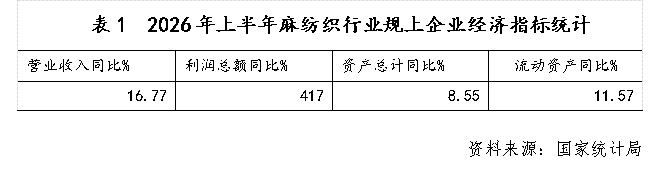
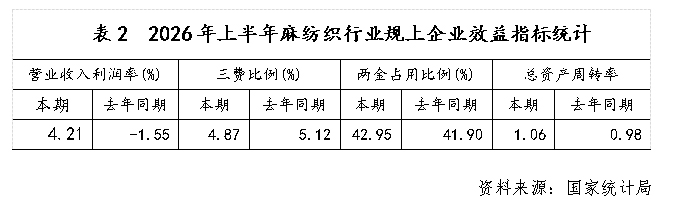
The export value of products achieved a slight increase,
while raw material imports remained at a high level
(I) Export Performance Varies by Product Category
According to China Customs statistics, for China’s bast fiber textile products (excluding bast fiber garments and clothing accessories), the export value in January–June 2026 reversed the decline seen in Q1 and posted a slight year-on-year increase of 1.69% compared with 2025. Among them, flax yarn achieved a 20.56% year-on-year rise in export value thanks to higher prices despite lower export volume. Both export volume and value of flax fabrics dropped year-on-year. The export volume of woven hemp fabrics rose by 14.88% year-on-year, and the export value of jute products increased by 2.4% year-on-year. In contrast, ramie yarn and fabrics recorded substantial year-on-year declines in both export volume and value.
Analysis of contributing factors: Ramie products are currently mainly oriented to the domestic market. The falling export volume of flax textile products stems from seasonal purchasing factors as well as market caution and weakened purchasing willingness caused by raw material price fluctuations. More fundamentally, the slow growth of the global market, order diversion, classification rules for exported low-proportion flax blended/interwoven fabrics, and shifting demand for end products are also driving changes.
(II) Raw Material Imports Fluctuate at High Levels
1. Flax Fiber
China Customs data shows that monthly imports of flax fiber fluctuated in the first half of 2026 but remained at the high monthly import levels established in Q1 (see Figure 1 and Figure 2). From January to June 2026, imports of flax hackled tow rose by 23.95% year-on-year, with average prices up 48.31%. Meanwhile, imports of flax tow increased by 77.61% year-on-year, and average prices grew by 23.10%.
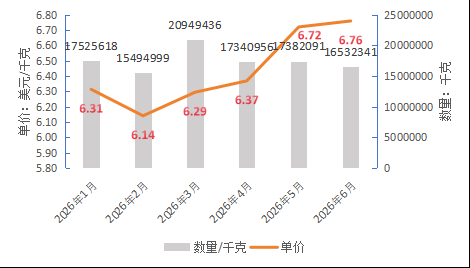
Figure 1 Import Volume Statistics of Flax Hackled Tow, Jan–Jun 2026
Source of data: China Customs
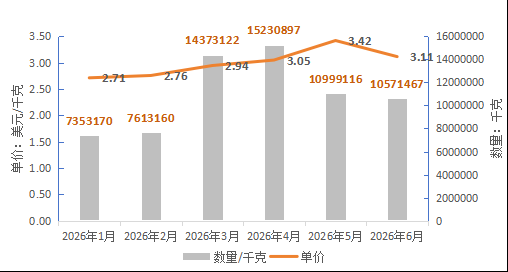
Figure 2 Import Volume Statistics of Flax Tow, Jan–Jun 2026
Source of data: China Customs
(1) Hackled Tow
By country of origin, France remained China’s main supplier of hackled tow. However, its share fell by 8.5 percentage points year-on-year compared with 2025. The combined share of France, Belgium and the Netherlands dropped by 9.65 percentage points. Meanwhile, Egypt’s share rose by 8.18 percentage points and Russia’s share increased by 0.56 percentage points (see Figure 3 and Figure 4).
In the first half of 2026, the average import unit price of hackled tow rose year-on-year: +2.5 USD/kg for France, +2.26 USD/kg for Belgium, +2.62 USD/kg for the Netherlands, +1.13 USD/kg for Egypt and +0.19 USD/kg for Russia (see Figure 3 and Figure 4).
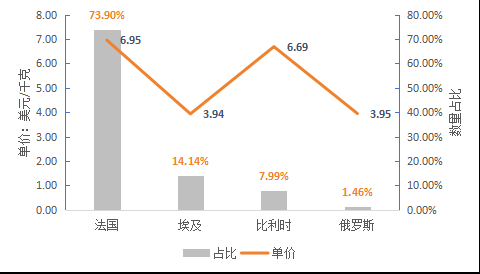
Figure 3 Country-wise Import Statistics of Flax Hackled Tow, Jan–Jun 2026
Source of data: China Customs
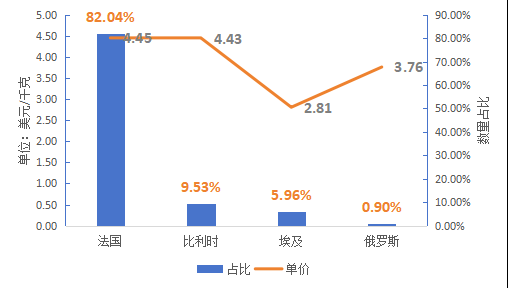
Figure 4 Country-wise Import Statistics of Flax Hackled Tow, Jan–Jun 2025
Source of data: China Customs
(2) Flax Tow
By country of origin, the major source countries for flax tow imports in the first half of 2026 were broadly consistent with those of hackled tow (see Figure 3 and Figure 5). Although the market shares of France and Belgium declined year-on-year against 2025, they remained the primary suppliers with high prices. Egypt recorded a notable increase in its share, more than doubling compared with the first half of 2025 (see Figure 5 and Figure 6).
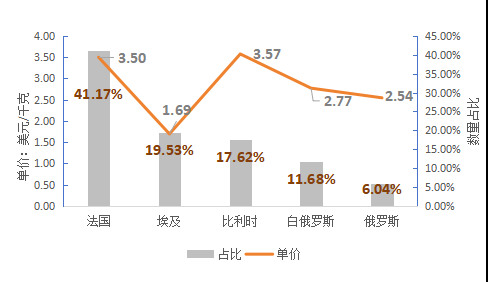
Figure 5 Country-wise Import Statistics of Flax Tow, Jan–Jun 2026
Source of data: China Customs
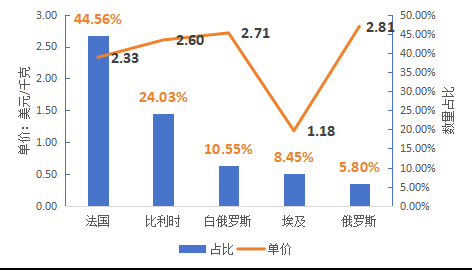
Figure 6 Country-wise Import Statistics of Flax Tow, Jan–Jun 2025
Source of data: China Customs
Analysis shows that the complete industrial chain and capacity expansion of China’s bast fiber textile industry serve as the prerequisite. As more consumers learn about and embrace bast fiber products, the consumption potential of the domestic bast fiber textile market is being vigorously unlocked, and the booming domestic market constitutes the fundamental driver.
2. Hemp
According to China Customs statistics, China imported 4,508 tons of hemp in January–June 2026, nearly tripling compared with 2025. This figure has exceeded the annual hemp import volume recorded in all years except 2024 (4,437 tons in 2025). Of the total, processed hemp and staple fiber imports stood at 2,618 tons, up by 180.6% year-on-year. France was the primary source country, accounting for 96.2% of imports. Imports of raw or retted hemp reached 1,890 tons, a year-on-year increase of 217.6%, with imports from the Netherlands and France making up 99.95% of the total. See Figure 7 to Figure 10 for detailed data.
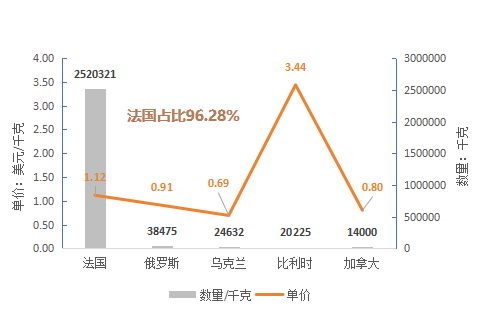
Figure 7 Country-wise Import Statistics of Processed Hemp and Staple Fiber, Jan–Jun 2026
Source of data: China Customs
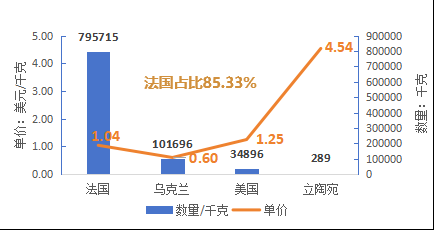
Figure 8 Country-wise Import Statistics of Processed Hemp and Staple Fiber, Jan–Jun 2025
Source of data: China Customs
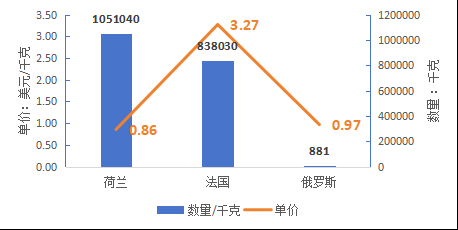
Figure 9 Country-wise Import Statistics of Raw or Retted Hemp, Jan–Jun 2026
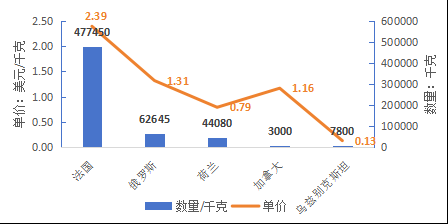
Figure 10 Country-wise Import Statistics of Raw or Retted Hemp, Jan–Jun 2025
Source of data: China Customs
Analysis shows that China is a major global grower, producer and processor of hemp. With the development of China’s hemp industry, the promotion of the unique functional properties of hemp products, the unleashing of consumption potential in the huge domestic market, together with the price advantage of hemp raw materials, market demand for hemp fiber has grown rapidly.
Future Outlook
At present, enterprises in the industry are still confronted with overlapping pressures arising from adverse external factors and uncertainties including geopolitics, conflicts, trade frictions and barriers, and weakening economic momentum, coupled with internal pressures from economic transition, industrial upgrading and the structural contradiction of strong supply against weak demand. The pattern that raw material supply relies heavily on imports has not seen substantive changes. Affected by market supply-demand relations and other non-market factors, price fluctuations of flax raw materials and yarns tend to become normal. Signs of cut-throat price competition have emerged for conventional blended flax fabrics. In addition, the hemp sector faces issues such as the lack of fiber standards and the sale of counterfeit and shoddy hemp products via online channels.
The meeting of the Political Bureau of the CPC Central Committee held on July 30 proposed to “promote sustained, innovative, high-quality and sound economic development and strive for a good start for the 15th Five-Year Plan”. In arranging economic work for the second half of the year, the meeting pointed out that China will further implement the AI Plus initiative and continue to advance the transformation and upgrading of traditional industries. Macroeconomic policies should deliver greater effectiveness. It emphasized effectively expanding domestic demand, expanding high-quality supply to meet consumption needs of different groups, fostering a fair and orderly market competition environment, formulating and implementing the Regulations on Building a Unified National Market, continuing to comprehensively rectify cut-throat competition, optimizing the development environment for private enterprises, and promoting the standardized and healthy development of the platform economy.
Thanks to their micro-structure and material composition, bast fibers naturally possess properties such as UV resistance, antibacterial performance, moisture absorption and air permeability, which perfectly satisfy consumers’ demand for comfortable, green, fashionable and healthy textiles. By giving full play to the advantages of the bast fiber textile industry as a niche yet time-honored characteristic industry, and expanding application fields and product differentiation through scientific and technological innovation, the bast fiber textile industry in China will surely achieve steady and long-term development.
Reprinted from China Bast Fiber Textile Industry Association https://cblfta.cn/newsinfo/9233216.html
- Pre:None
- Next:Public Announcement: Proposed 2026/9/10