 Chinese
 English

Wuhan Hemp Convenes July Business Analysis and Aug‑Sep Production Planning Meeting
2026/8/14 view:
On August 12, Wuhan Hemp convened the July Business Analysis and August‑September Production & Operation Planning Meeting. The meeting comprehensively reviewed the operational performance of each business division in July, conducted an in‑depth analysis of opportunities and challenges facing the textile industry, and rolled out detailed arrangements for production priorities, quality control, cost optimization and digital transformation for August‑September. It was emphasized at the meeting that the company should adhere to the principle of "quality‑oriented, efficiency‑first". Through refined management and technological innovation, sustained and steady development shall be guaranteed.
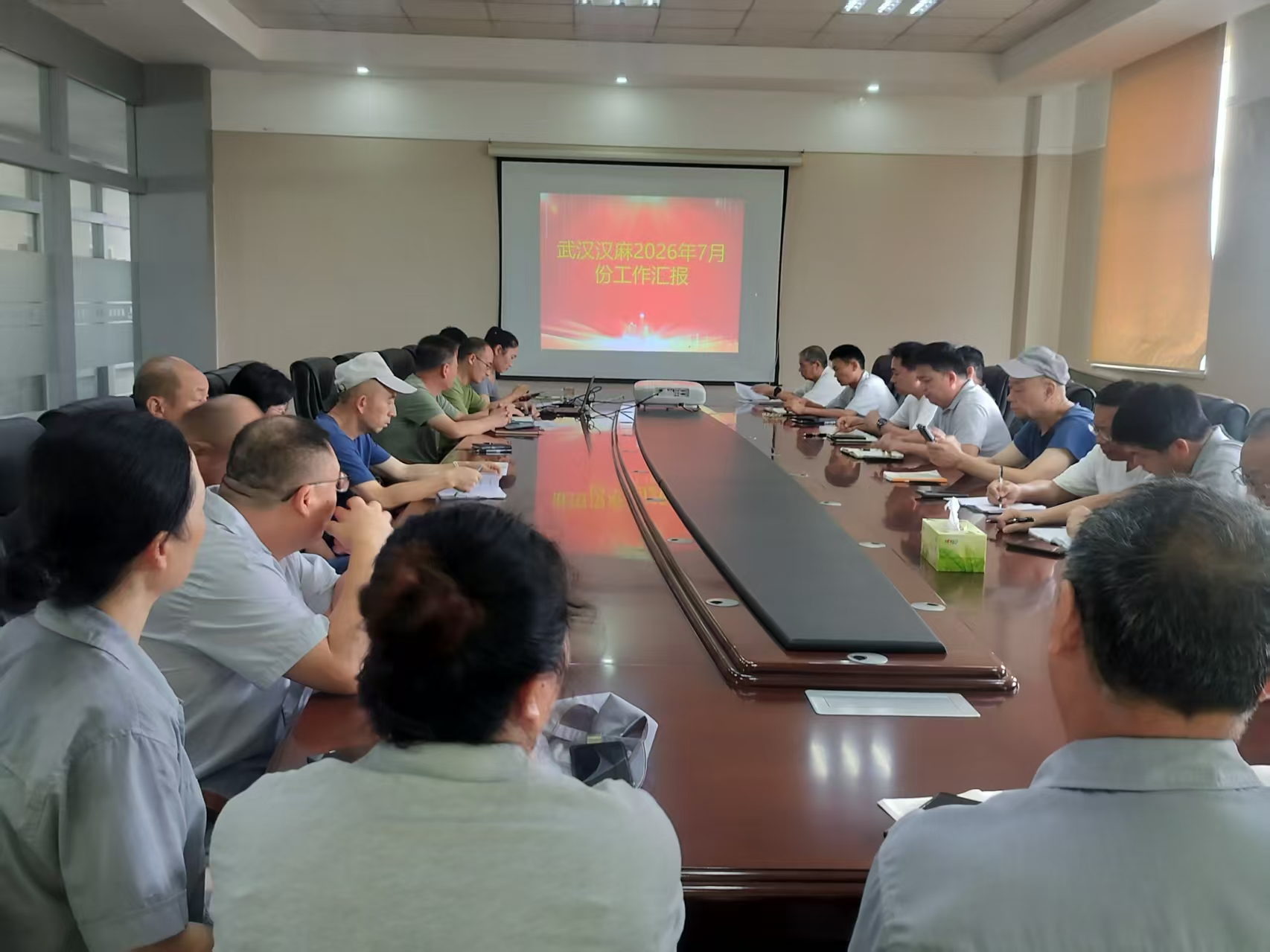
The meeting reported that the company maintained sound operational resilience amid the complex and volatile market environment in July. Despite mounting pressure on bulk products caused by capacity relocation in Southeast Asia and changes in the trade landscape, the company achieved steady growth in overall profits by flexibly adjusting its product mix and tilting its business toward high-value-added and high-technology-threshold market segments. Financial data showed that the company’s capital turnover efficiency continued to improve and the inventory structure was further optimized.
Against the backdrop of escalating demand for high-end linen textile products from downstream brand clients, the meeting identifiedtechnological breakthroughs and process upgrading as the core strategic task for August and September, aiming to seize market initiative with a higher-standard product portfolio:
(1) Process breakthroughs for high-end product lines: Focusing on the high-end market and the field of high-count and high-density blended textiles, the company will optimize spinning parameters and technological processes to precisely meet the stringent quality requirements of international brand clients for premium yarns, further consolidating its leading edge in high-end market segments.
(2) Smart manufacturing empowers consistent product quality: The company will accelerate the commissioning and application of new automated equipment, and realize precise control of production parameters based on data feedback from digital systems. By minimizing deviations caused by manual intervention through smart manufacturing, it will comprehensively improve the consistency and stability of products across batches, ensuring high-quality delivery with stringent standards.
(3) Forward-looking layout of new product matrix: Closely tracking the market trends for autumn and winter, the company will proactively deploy high-count and high-density fabrics and featured blended materials. It will prioritize the R&D of innovative products applicable to new scenarios for high-end brand clients, driving the improvement of product added value through technological innovation.
The meeting emphasized that the improvement of management efficiency is the core pillar of business growth:
(1) Digital empowerment: Phased progress has been made in data collection via the Manufacturing Execution System (MES) across all workshops. The next focus will be on breaking down data barriers between the U8 system and the MES in links including raw material and finished product warehousing, to achieve full-traceability of the entire production process. Meanwhile, the company will explore refined cost accounting for auxiliary materials such as chemical materials and packaging supplies to provide real-time data support for management decision-making. The full launch of administrative workflows on the OA system will drive paperless office operations and efficient business processing.
(2) Strict adherence to safety and environmental red lines: In view of the recent tightening of environmental protection regulations, the meeting reiterated that safety and environmental compliance constitute the bottom line for enterprise survival. The company has promptly implemented rectification requirements, upgraded sewage treatment and waste gas treatment facilities to ensure up-to-standard emissions. It will further carry out special 6S management campaigns, establish a traceability mechanism for cleaning responsibilities, eliminate on-site potential safety hazards, raise the safety awareness of all employees, and build a long-term safety management system.
- Pre:Show Preview: Meet Wuhan Hemp 2026/8/19
- Next:The semi-annual sales meeting 2026/8/5